What Is Science? The Historical Search for Reliable Knowledge
Science is exceptionally successful, yet its success cannot be explained by a single infallible method. This historical introduction follows changing ideas about observation, reason, experiment, evidence, scientific explanation, and the institutions through which knowledge is tested and shared. From ancient investigations and cross-cultural traditions through early modern experimentation to contemporary debates over scientific realism and objectivity, it asks how fallible investigators can nevertheless establish dependable knowledge. Scientific reliability emerges not from certainty or an unchanging recipe but from disciplined, corrigible practices adapted to different questions and forms of evidence.
Key Points
- Scientific inquiry has diverse historical origins and cannot be reduced to a single European founding event.
- Observation and reasoning are indispensable but require interpretation, methodological care, and criticism.
- Induction, deduction, abduction, experiment, modelling, and historical inference serve different scientific purposes.
- Scientific knowledge grows through both cumulative findings and changes in concepts and explanations.
- Instruments, institutions, shared standards, and critical communities contribute to scientific reliability.
- Scientific success supports justified confidence without making scientific claims infallible or settling every debate about reality and truth.
Where This Article Fits
What Is Science? provides the broad historical and philosophical orientation for the History of Ideas topic. It introduces the changing practices by which knowledge is established, rather than offering a general history of biological discoveries or a defence of any particular contemporary framework.
Several articles develop episodes and questions introduced here: Aristotle and the Foundations of Biology examines ancient biological investigation; How Did the Cell Become the Unit of Life? follows microscopy and cell theory; The Chronometric Revolution — Time, Scale and Biological Explanation explores the historical construction of deep time; and the evolution article traces changes in biological explanation. Existing essays on scientific explanation and explanatory grammars provide more specialised philosophical discussions. Other planned histories—of the Scientific Revolution, technology, heredity, physiology, ecology and cognition—will extend the narrative as they are developed. Their mention here is an editorial allusion, not a claim that every article has already been published.
The article does not present the history of science as a progression towards APS. It establishes a general context within which APS, like other conceptual frameworks, can be evaluated by its explanatory claims and evidential contribution.
Why Trust Science?
We live among the achievements of science. Vaccines and antibiotics have altered the prospects of survival; astronomy describes stars and galaxies far beyond ordinary perception; geology reconstructs the history of a planet whose age dwarfs recorded human history; and evolutionary biology explains relationships among organisms that no individual could have witnessed developing. Such achievements are not merely impressive collections of facts. They have changed what people think the world is like, what questions can be asked about it, and what counts as an adequate answer.
Yet success creates a puzzle. Scientists are human. They disagree, make mistakes, work with imperfect instruments, and interpret observations through ideas they have inherited or devised. Their conclusions may be revised. Some theories once regarded as secure have been replaced; others survive but acquire new meanings or domains of application. Why, then, should scientific claims command confidence?
It is tempting to reply that science follows the scientific method. In elementary accounts, this is a familiar sequence: observe, propose a hypothesis, conduct an experiment, analyse the results, and reach a conclusion. It captures something important about some investigations. But astronomers cannot experimentally rearrange galaxies, geologists cannot repeat the formation of continents, and evolutionary biologists cannot rerun the entire history of life. A mathematical model, a field survey, a controlled clinical trial and the reconstruction of an ancient climate may all be scientific without following the same procedure.
Another answer is that science deals in facts rather than opinions. But facts do not organise themselves into explanations. A measurement has meaning only when investigators know what was measured, how, with which instrument, under what conditions and with what uncertainties. Scientific evidence is not less valuable because it is interpreted; its value depends partly on making those interpretations open to examination.
The history of science is therefore more than a parade of discoveries. It is also the history of changing ways of investigating nature, arguing about evidence, identifying causes, constructing concepts and deciding when a claim deserves acceptance. To understand why science works, we must understand both its intellectual achievements and the practices that make those achievements answerable to the world.
The Historical Emergence of Scientific Inquiry
There was no single moment at which science began. Long before the modern word ‘science’ acquired its present meaning, people observed seasonal cycles, cultivated plants, treated disease, measured land, navigated by the heavens, worked metals and devised mathematical techniques. Practical knowledge was not always organised as a distinct intellectual enterprise, but it supplied problems, skills and observations on which later investigations depended. Different cultures developed sophisticated traditions in astronomy, mathematics, medicine and natural history; their contributions were neither identical nor reducible to a single line of descent.
In ancient Greek philosophy, questions about the natural world became linked to systematic arguments about explanation and knowledge. Plato distinguished changing appearances from the intelligible objects of secure knowledge, while Aristotle sought causes within the natural world itself. Aristotle’s works on animals, logic and natural philosophy combined observation, comparison, classification and reasoning about causes. The familiar caricature of an Aristotle who simply deduced nature from abstract principles misses the investigative character of much of his biological work. The separate History of Ideas article on Aristotle explores that contribution in greater depth.
Ancient Greek investigations were only one part of a larger history. Mathematical and astronomical traditions developed in South Asia and China; medical, astronomical and mathematical scholarship flourished across the Islamic world; and the translation, criticism and extension of earlier texts helped transmit ideas among languages and regions. The relationships among these traditions were uneven and historically specific. They should not be flattened into either an exclusively European story or an undifferentiated account in which all contributions were the same. The important point is that reliable observation, mathematical reasoning, technical skill and critical inquiry have a long, interconnected history.
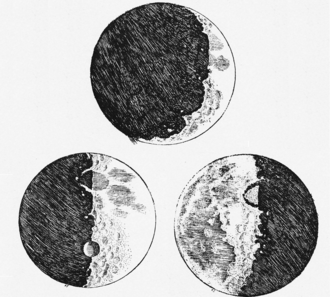
In early modern Europe, changes in printing, navigation, instruments, commerce, learned institutions and approaches to natural philosophy helped transform the scale and organisation of investigation. The expression Scientific Revolution names important developments of roughly the sixteenth and seventeenth centuries, but historians dispute how revolutionary, unified or geographically self-contained they were. Nicolaus Copernicus reorganised planetary astronomy; Johannes Kepler found mathematical relationships in planetary motions; Galileo Galilei used telescopic observations and mathematical arguments to challenge established cosmological assumptions; William Harvey investigated the circulation of blood; and Isaac Newton brought terrestrial and celestial motions within a powerful mathematical framework. These figures did not share one identical method. Their work nevertheless made new demands upon the relationship between explanation and evidence.
Francis Bacon argued that inquiry should not rush from a few familiar examples to universal conclusions. His Novum Organum (1620) called for disciplined investigation and warned against recurrent sources of error, which he termed idols. Bacon’s programme was not simply the instruction to gather observations. It involved organising evidence, examining alternatives and deliberately correcting habits of thought. In practice, early modern scientific achievements arose from combinations of mathematical deduction, observation, experiment, craftsmanship and argument, not from universal obedience to Bacon’s prescriptions.
The development of scientific journals and societies changed how findings circulated. Henry Oldenburg launched the Royal Society’s Philosophical Transactions in 1665, an important innovation in communicating investigations. Modern peer review, however, should not be projected back onto its earliest editorial arrangements. The institutions that now assess and disseminate scientific claims developed over centuries, often imperfectly. Their history reminds us that knowledge is not produced by reasoning alone: it must also be recorded, communicated, criticised and made available for others to investigate.
Evidence, Observation and Objectivity
Scientific inquiry begins with encounters with the world, but an observation is not simply a transparent picture of reality. The botanist identifies structures through inherited anatomical categories; the astronomer interprets a telescope image through optics and calibration; the chemist reads an instrument whose output depends on a physical model and procedures for excluding contamination. In each case, perception and technology make phenomena accessible while also shaping the form in which evidence appears.
This does not make observation arbitrary. The resistance of the world is precisely what makes investigation worthwhile. A microscope may reveal something unexpected; a prediction may fail; independent instruments may agree or conflict. The question is not whether evidence is free from all assumptions, but whether assumptions can be exposed, alternatives considered, uncertainties estimated and results checked. A claim becomes stronger when investigators can show how they reached it and how it might be challenged.
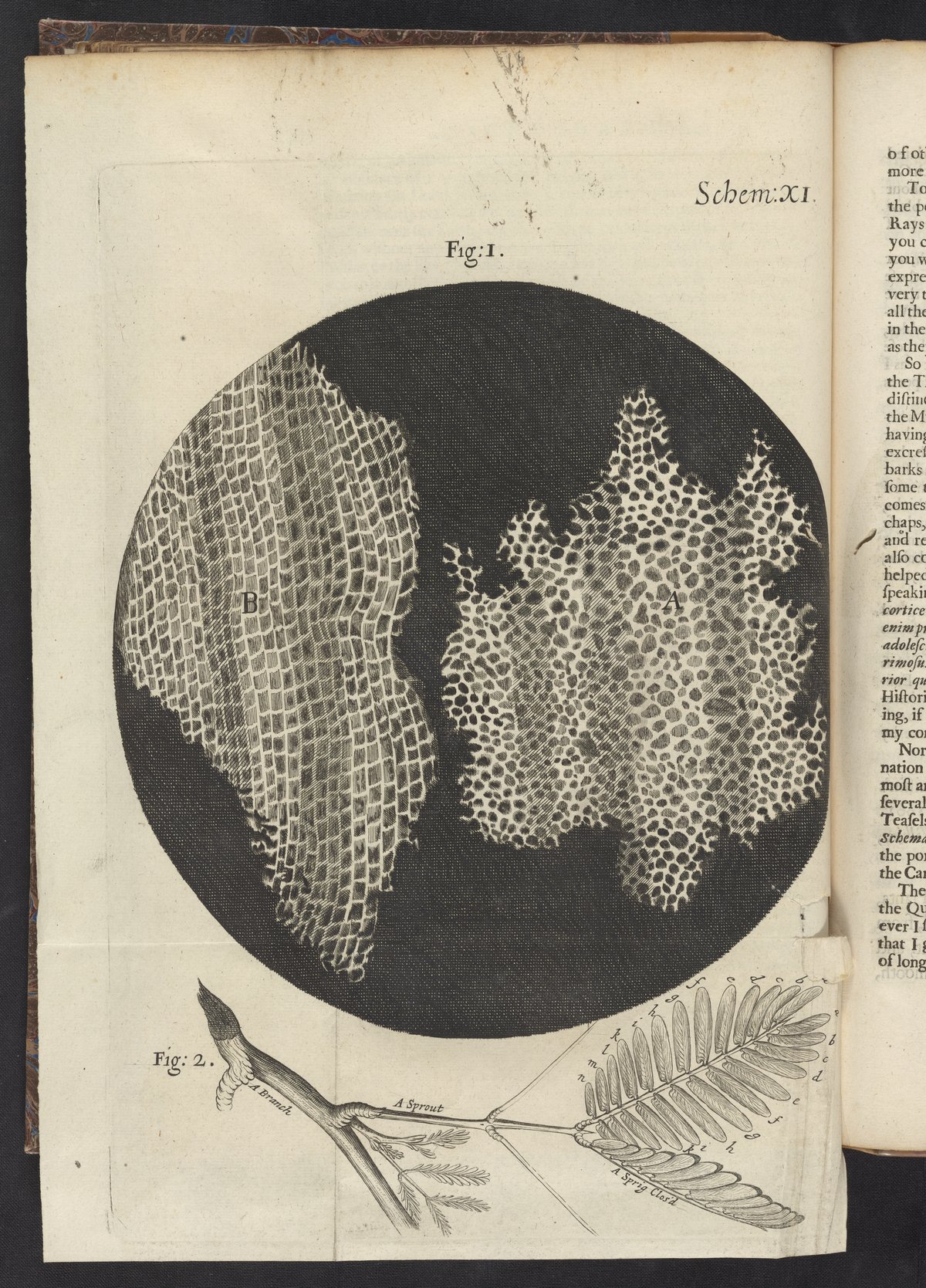
Consider the early history of microscopy. Robert Hooke’s Micrographia (1665) offered striking illustrations of previously unseen structures, including the compartments in cork to which he applied the term cells. He did not thereby discover the modern biological cell as a living unit with the characteristics later established by cell theory. That interpretation required subsequent observations, instruments and conceptual developments. The History of Ideas article How Did the Cell Become the Unit of Life? examines this longer transformation. Here the episode illustrates a general point: a new instrument may reveal phenomena before scientists understand what those phenomena signify.
Objectivity is often taken to mean that an investigator has no standpoint, interests or expectations. Such complete detachment is neither attainable nor necessary. More useful is the aspiration to make claims answerable to standards that do not depend merely on the authority or preferences of the claimant. Accurate records, calibration, experimental controls, transparent analysis, criticism by differently situated investigators and independent replication or corroboration can all contribute. What counts as an appropriate check varies with the question. One cannot replicate a particular ancient volcanic eruption, but one can compare independent geological records, dating methods and predictions derived from competing reconstructions.
Scientific objectivity also has a history. Ideas of faithful depiction, mechanical recording, trained judgement and collective criticism have been emphasised differently at different times. Nor are scientific communities immune to exclusion, prestige, financial incentives or political pressures. The appropriate conclusion is neither that science is perfectly impartial nor that it is only another expression of social power. Rather, objectivity is an achievement that must be cultivated and continually examined.
The Search for a Scientific Method
Much of the philosophy of science has been a search for the reasoning that makes scientific knowledge distinctive. Three familiar forms of inference illuminate why the search has proved difficult.
Deduction draws conclusions that follow from premises: if all members of a specified class have a property, and an object belongs to that class, the conclusion follows provided the premises are true. Deduction is indispensable for mathematics, theory construction and the derivation of predictions. It cannot, by itself, establish that the premises describe the world correctly.
Induction extends beyond the observed cases. Repeated observations of a pattern can support a generalisation or expectation, but the conclusion is not logically guaranteed by the observations. David Hume made this difficulty central to the philosophy of knowledge: past regularities alone cannot provide a deductive proof that the future must resemble the past. Scientific inquiry cannot simply dispense with inductive reasoning, yet its justification and appropriate limits remain philosophical problems.
Abduction, often described as inference to the best explanation, asks which proposed account would best make sense of the available evidence. Charles Sanders Peirce developed a distinctive account of abductive reasoning, while later philosophers analysed its relationship to explanatory virtues and evidence. For example, evidence of common ancestry in biology is not confined to one repeated experiment. It arises from converging patterns in comparative anatomy, fossils, geography, development and molecular sequences. A compelling explanation must account for this convergence while remaining open to competing hypotheses and new evidence.
These forms of reasoning are not rival schools among which science must choose once and for all. They frequently cooperate. An investigator may infer a possible explanation abductively, deduce consequences from it, and use inductive or statistical evidence to assess how well those consequences are supported. The procedures differ across research contexts.
William Whewell’s nineteenth-century philosophy provides an illuminating bridge between Bacon and later debates. Whewell argued that scientific discovery requires more than collecting facts. Investigators bring ideas to bear upon observations, organising them through what he called the colligation of facts. Confidence can grow when independently developed lines of inquiry converge, a pattern he called the consilience of inductions. This was an early recognition that scientific progress involves both evidence and conceptual invention.
In the twentieth century, Karl Popper challenged the view that theories become scientifically secure through accumulating confirmations. A universal claim may be consistent with many observations, yet one well-established counter-instance can expose a serious difficulty. Popper therefore stressed bold conjectures and severe attempts at refutation. His account gave scientific criticism a prominent place and sharpened the distinction between testable claims and claims protected from every possible challenge.
Yet falsification is not as mechanically decisive as it first appears. Predictions usually depend on assumptions about instruments, background conditions and auxiliary hypotheses. When a result conflicts with a prediction, investigators must ask whether the main theory, a subsidiary assumption or the measurement itself is responsible. Some apparently troublesome findings lead to fruitful refinements; others eventually undermine a research programme. Imre Lakatos later sought to understand theory appraisal through the development of research programmes over time rather than isolated tests alone.
Carl Hempel, meanwhile, examined the logical structure of scientific explanation. His influential covering-law models asked how particular events might be explained by reference to general laws and relevant conditions. This is a different problem from the question of how a hypothesis is tested, although Hempel also wrote about confirmation and hypothetico-deductive reasoning. The limits of covering-law accounts helped stimulate causal, statistical, mechanistic and other approaches. The companion History of Ideas essay How Did Scientists Learn to Think About Explanation? follows those debates in greater detail.
No single one of these accounts captures everything scientists do. Controlled experiments may be central to some questions, while comparative methods, simulation, historical reconstruction, mathematical proof within a model, or sustained observation are central to others. This is not permission to call any procedure scientific. It is a reason to ask what forms of evidence and criticism are appropriate to the particular claim.
How Scientific Knowledge Changes
Science has a history of accumulation. Astronomical observations are preserved; measurements become more precise; well-established relationships are used in new research; and successful theories support technologies that would otherwise be difficult to explain. But accumulation is only part of the story. Sometimes new evidence changes the questions scientists ask, the categories they use or the relationships they regard as fundamental.
The history of chemistry offers an instructive example. Eighteenth-century investigations of combustion and gases involved increasingly precise measurements, changing experimental practices and competing explanations. Antoine Lavoisier’s work contributed to the reorganisation of chemical concepts and nomenclature. The change was not simply the addition of one more substance to a list: it altered how many familiar reactions were understood. Historians continue to examine the contributions of other investigators and the extent to which this episode deserves the title chemical revolution. The broader lesson is that changes in evidence and changes in concepts can be inseparable.
Thomas Kuhn made the historical character of scientific knowledge central to twentieth-century philosophy. In The Structure of Scientific Revolutions (1962), he argued that much research takes place within established disciplinary commitments, examples and standards of successful problem-solving. Periods of relatively stable normal science may be disrupted when persistent difficulties and new approaches produce a reorganisation of the field. Kuhn’s language of paradigms and revolutions became influential far beyond science, sometimes in ways he did not intend.
It would be misleading to conclude that Kuhn proved scientific theories are merely arbitrary social conventions. His work raised difficult questions about standards of comparison, conceptual change and scientific progress, while also taking the achievements of scientific practice seriously. Whether competing theories can be compared by neutral criteria, and how continuity survives conceptual transformation, remain debated questions.
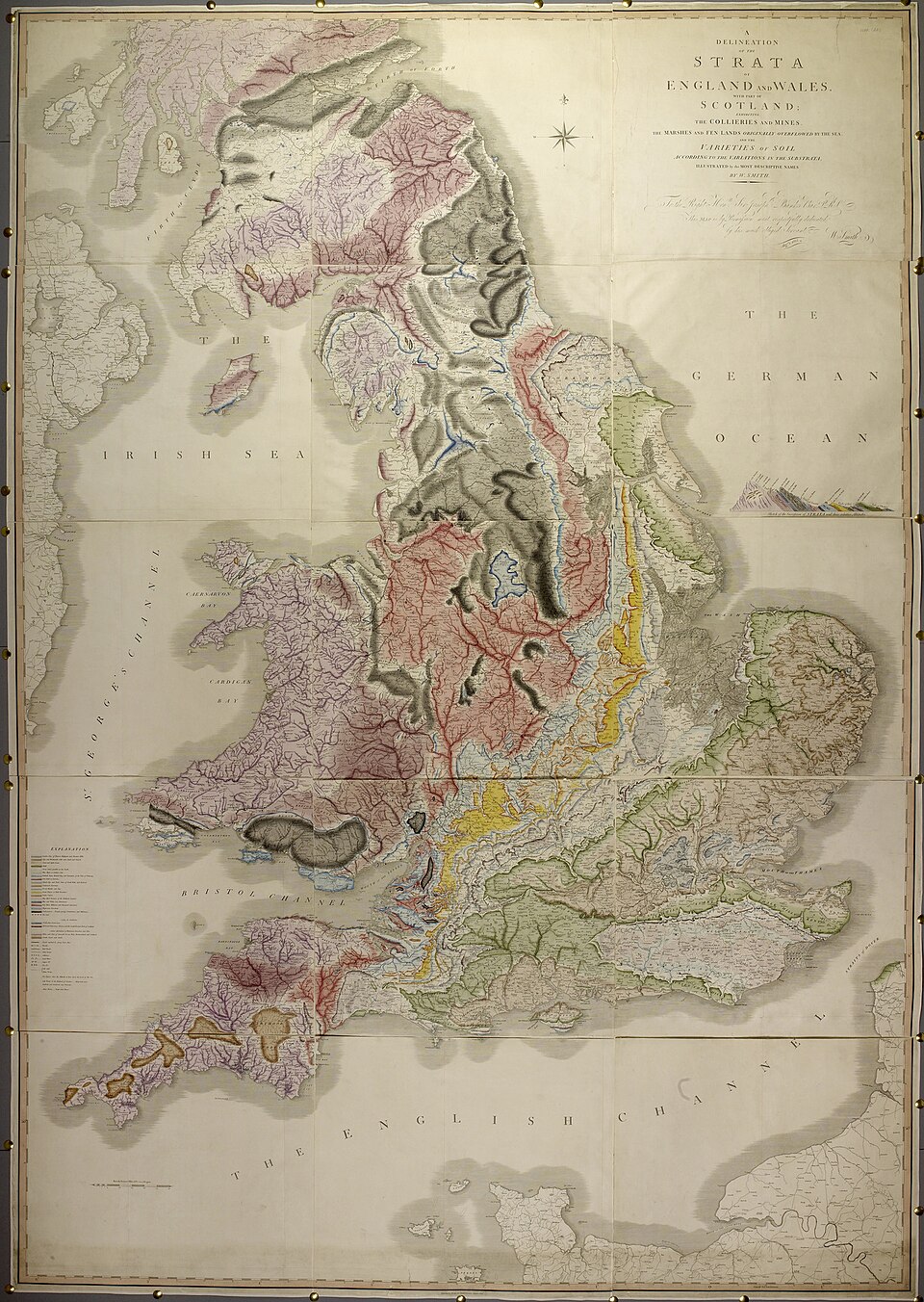
Geology and evolutionary biology make especially clear why scientific change cannot be understood only as laboratory falsification. The recognition of deep geological time depended on stratigraphy, fossils, physical processes and eventually radiometric dating. The historical development of these methods is examined in The Chronometric Revolution — Time, Scale and Biological Explanation. Evolutionary theory likewise brought together observations of variation, geographical distribution, fossils, heredity and adaptation into new explanations of life’s diversity. Darwin and Alfred Russel Wallace jointly presented accounts of natural selection in 1858; Darwin’s On the Origin of Species appeared in 1859. The History of Ideas essay on the transformation of evolutionary explanation follows this history beyond a single famous publication.
These episodes reveal different forms of progress. Sometimes a theory is replaced. Sometimes its range is restricted while it remains useful within a domain. Sometimes improved measurement sharpens an existing explanation; sometimes a new concept makes previously disconnected observations intelligible together. Scientific progress is therefore neither a simple march towards final truth nor a sequence of unrelated fashions. Its assessment requires attention to what particular investigations have actually established.
Science as a Collective and Technological Enterprise
The image of a solitary genius discovering a truth in a moment of insight conceals much of scientific work. Knowledge depends on technicians, instrument makers, field collectors, mathematical collaborators, laboratories, archives, observatories, museums, journals, universities and other institutions. Ideas travel through correspondence, teaching, translation, criticism and publication. Scientific communities develop standards for competent work, although those standards themselves change.
Technology is not merely the application of knowledge already acquired. Instruments can create new research possibilities and reveal phenomena for which existing theories are unprepared. The telescope helped transform astronomy; the microscope opened new worlds of anatomical and microbial observation; precision balances changed chemistry; and techniques of dating altered the historical sciences. Conversely, theoretical understanding may improve instruments or make new measurements possible. The relationship is reciprocal, and its fuller history deserves a separate article in this series.
A measurement is not automatically trustworthy because it comes from a machine. Instruments require design assumptions, calibration, maintenance and interpretation. Increasingly elaborate experiments may depend on large collaborations and statistical methods. The discovery announced at CERN in 2012 of a particle consistent with the Higgs boson depended on detectors, accelerators, theoretical predictions and the combined work of many investigators. Its evidential significance cannot be reduced to a popular percentage said to express the probability that a theory is true.
Publication and criticism matter because individual investigators cannot personally verify the whole of modern science. The confidence a botanist places in a climate reconstruction, or a physicist in a biological account of inheritance, depends on specialised communities whose methods and results can be examined. Peer review may help identify problems before publication, but it is not a certificate of truth. Subsequent replication, reanalysis, competing evidence and correction remain essential.
Institutions can also fail. Researchers face pressures to publish, obtain funding, attract attention and defend established positions. Access to resources and recognition has historically been unequal. Errors and sometimes misconduct occur. These realities do not erase the value of scientific institutions; they show why openness, accountability, methodological transparency and opportunities for independent challenge are indispensable rather than optional virtues.
Science, Reality and Its Limits
Scientific success invites a philosophical question: does a successful theory tell us what the world is really like, or does it chiefly organise experience and predict observable outcomes? Scientific realists commonly argue that the success of mature theories provides reasons to believe that they describe important aspects of a mind-independent world, including entities not directly observable. Other philosophers, including constructive empiricists, distinguish accepting a theory as empirically adequate from believing every aspect of its description to be literally true.
These disagreements cannot be settled by declaring that all observation is theory-laden. The fact that evidence is interpreted does not mean the world is invented by interpretation. Conversely, the existence of a world independent of us does not guarantee that our current concepts capture it perfectly. Scientific knowledge involves a continuing negotiation between theoretical commitments and empirical constraint.
Truth, prediction, explanation and practical control are related but not identical scientific aims. A model may make useful predictions while simplifying features of the system it represents. An explanation may reveal a causal mechanism without yielding exact predictions in every case. A historical reconstruction may be strongly supported by converging evidence even when the events cannot be experimentally repeated. Nor is every scientific question concerned with identifying universal laws: classification, description, comparison and the reconstruction of particular histories can be genuine intellectual achievements.
Science is also limited in scope. It is especially powerful when questions can be investigated through disciplined evidence and reasoning about the world. It does not, by itself, decide every question about what ought to be valued, how a society should distribute benefits and risks, or what constitutes a good life. Scientific findings can inform such decisions profoundly without replacing ethical, political or practical judgement. Equally, recognising limits does not make every competing claim equally credible. Explanations should be assessed by standards appropriate to the kinds of questions they purport to answer.
The boundary between science and other intellectual activities is therefore not adequately captured by a slogan. Mathematics, history, philosophy and engineering share some standards with scientific inquiry while pursuing partly different aims and methods. Pseudoscience presents a further issue: not every non-scientific pursuit is pseudoscientific, and the problem is often a misleading claim to scientific authority without corresponding openness to evidence and criticism.
Why Science Works
We began with a puzzle. How can fallible investigators establish reliable knowledge without a universal recipe or a guarantee of certainty? The history of science suggests that the answer lies in a combination of achievements rather than a single philosophical principle.
Scientific inquiry brings questions into contact with evidence through practices designed to make mistakes discoverable. It uses observation and experiment, but also mathematics, comparison, modelling, historical inference and the invention of new concepts. Instruments extend human capacities while creating new demands for calibration and interpretation. Communities preserve findings, criticise arguments and develop standards for deciding when evidence is sufficient. Successful explanations connect phenomena that once seemed unrelated; unsuccessful claims may be corrected, restricted or abandoned.
None of these safeguards works perfectly, and none is exclusive to science. What matters is the systematic development and combination of practices suited to the questions being investigated. Their success is shown not only in practical technologies, but in the depth, precision, scope and revisability of the explanations they make possible.
The most illuminating history of science is therefore neither a celebration of inevitable progress nor a catalogue of intellectual errors. It is the history of people learning how to ask better questions of the world, how to make evidence more informative, how to argue about what it means and how to correct conclusions when they fail. Scientific knowledge deserves confidence not because it has escaped human limitations, but because, at its best, it has developed unusually powerful ways of confronting them.
Explanatory Architecture
Central Question
How have scientific inquiry and ideas about reliable knowledge developed historically, and what explains the capacity of science to produce dependable knowledge despite the fallibility of its methods and practitioners?
Architectural Role
This article provides a historical and philosophical introduction to the development of scientific inquiry. It examines changing understandings of observation, evidence, reasoning, experimentation, explanation, objectivity, and the institutional practices through which scientific knowledge is established, criticised, and revised.
Its role is historical and contextual rather than programmatic. It does not propose a universal scientific method, establish a particular philosophical account of scientific knowledge, or present APS as the culmination of earlier scientific thought.
Preceding Explanatory Dependencies
The article draws upon the historical development of natural philosophy, mathematics, observational practices, experimental investigation, and traditions of systematic reasoning across different cultures.
It also draws upon philosophical distinctions between observation and inference, description and explanation, induction and deduction, scientific justification and scientific discovery, and the relationship between scientific theories and the world they seek to explain.
These are historical and conceptual dependencies rather than commitments to a single philosophical theory of science.
Subsequent Explanatory Developments
The article provides background for more specialised historical investigations into the emergence of modern scientific disciplines, including biology, and changes in the methods and standards through which scientific claims are evaluated.
Within the History of Ideas topic, these developments include changing conceptions of living systems, the establishment of the cell as a fundamental unit of biological investigation, evolutionary explanation, and the transformation of biological understanding through geological and chronological evidence.
The article also provides context for contemporary discussions of scientific explanation, methodological pluralism, scientific realism, and the relationship between conceptual frameworks and empirical inquiry.
Related Explanatory Questions
The historical development of science raises continuing questions about how evidence supports theories, how observations depend upon instruments and concepts, how scientific explanations differ from descriptions and predictions, and how scientific communities distinguish reliable findings from error.
Further questions concern the relationships among scientific progress, conceptual change, experimental intervention, mathematical modelling, historical reconstruction, and the social institutions through which knowledge is preserved and challenged.
These questions remain subjects of philosophical and scientific investigation rather than matters settled by a single historical account.
Position Within APS
This article belongs to the History of Ideas topic and provides general intellectual context for the APS website.
APS is a comparative explanatory methodology for biology, accompanied by a substantive account of living organisation. Its investigations necessarily operate within the wider scientific enterprise whose historical development is examined here.
The article does not derive APS from the history of science or treat its organisational commitments as conclusions established by that history. Rather, it helps situate APS within the broader development of scientific reasoning, explanation, criticism, and methodological accountability.
The relationship is therefore contextual: the history of science illuminates the intellectual practices within which contemporary biological explanations are developed and assessed, while the scientific adequacy of particular APS proposals remains a separate question requiring appropriate comparative evaluation.
See Also
References
- (1620). Novum Organum.
- (1984). The Complete Works of Aristotle: The Revised Oxford Translation. Princeton University Press.
- (1859). On the Origin of Species. John Murray.
- (1858). On the Tendency of Species to Form Varieties; and on the Perpetuation of Varieties and Species by Natural Means of Selection. Journal of the Proceedings of the Linnean Society of London. Zoology, 3(9), 45–62 . https://doi.org/10.1111/j.1096-3642.1858.tb02500.x
- (2007). Objectivity. Zone Books.
- (1983). Representing and Intervening: Introductory Topics in the Philosophy of Natural Science. Cambridge University Press. https://doi.org/10.1017/CBO9780511814563
- (1931). Collected Papers of Charles Sanders Peirce. Harvard University Press.
- (1948). Studies in the Logic of Explanation. Philosophy of Science, 15(2), 135–175 . https://doi.org/10.1086/286983
- (1665). Micrographia: Or Some Physiological Descriptions of Minute Bodies Made by Magnifying Glasses. With Observations and Inquiries Thereupon. Jo. Martyn and Ja. Allestry, Printers to the Royal Society. https://doi.org/10.5962/bhl.title.904
- (1992). The Essential Peirce, Volume 1: Selected Philosophical Writings (1867–1893). Indiana University Press.
- (1748). Philosophical Essays Concerning Human Understanding. A. Millar.
- (1993). The Advancement of Science: Science without Legend, Objectivity without Illusions. Oxford University Press.
- (1962). The Structure of Scientific Revolutions. University of Chicago Press.
- (1977). The Essential Tension: Selected Studies in Scientific Tradition and Change. University of Chicago Press.
- (1978). The Methodology of Scientific Research Programmes. Cambridge University Press.
- (2001). Aristotle's Philosophy of Biology: Studies in the Origins of Life Science. Cambridge University Press.
- (1990). Science as Social Knowledge: Values and Objectivity in Scientific Inquiry. Princeton University Press.
- (2017). A Manifesto for Reproducible Science. Nature Human Behaviour, 1, 0021 . https://doi.org/10.1038/s41562-016-0021
- (1959). The Logic of Scientific Discovery. Hutchinson.
- (2017). Idealization and the Aims of Science. University of Chicago Press. https://doi.org/10.7208/chicago/9780226507194.001.0001
- (1980). The Scientific Image. Clarendon Press.
- (1840). The Philosophy of the Inductive Sciences, Founded Upon Their History. John W. Parker.